.jpg)
Holoindustry joined more than 500 industrial professionals at Critical Infra ConnAction 2026, a two-day invitation-only conference held on 25–26 March at Ensana Thermal Margitsziget Hotel in Budapest. The event, organised by Com-Forth Kft., brought together decision-makers from the energy, utilities, oil and gas, and manufacturing sectors to discuss industrial digitalisation, OT cybersecurity, and AI-driven operations.
For Holoindustry, the conference was more than an exhibition opportunity. It was a chance to put ThermalGlass Explorer directly into the hands of the people it is built for.
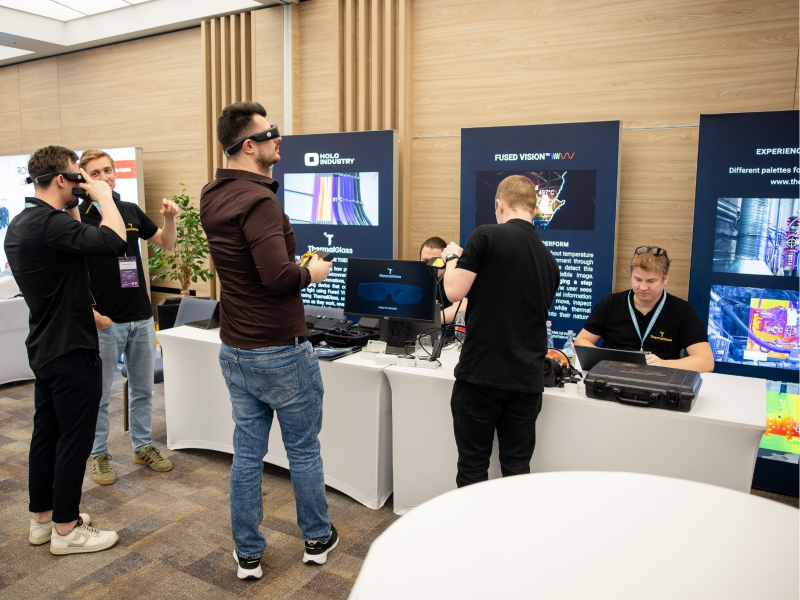
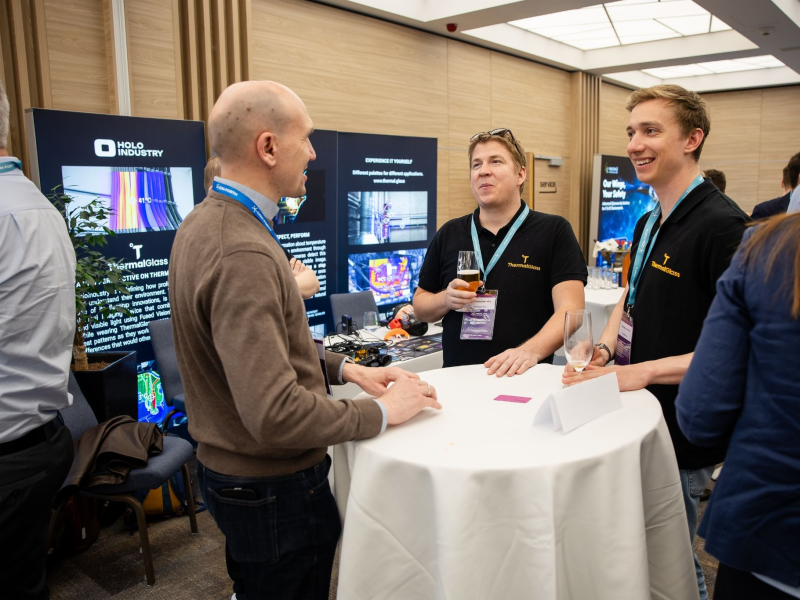
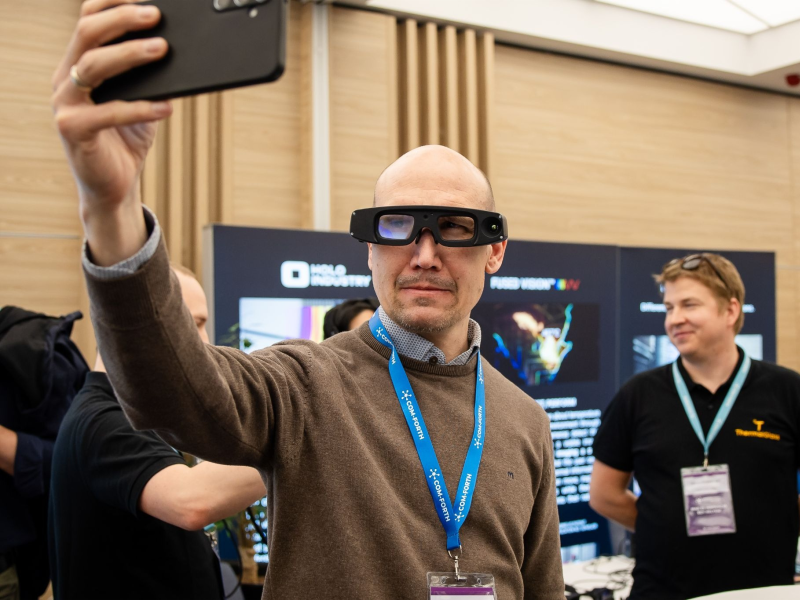
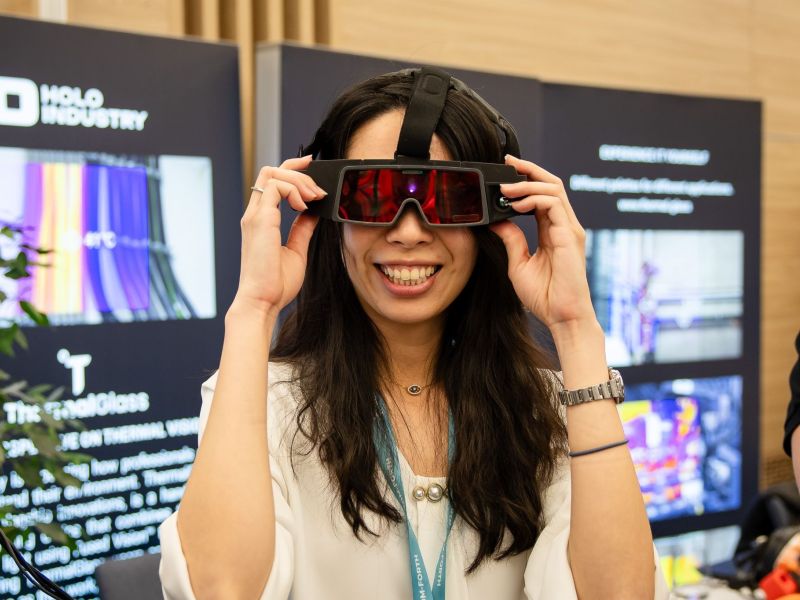
Throughout both days, Holoindustry operated a dedicated stand where visitors could try ThermalGlass Explorer themselves. The interest was significant. Engineers, plant managers, and safety professionals from across the sectors represented at the conference took the time to try the device, ask detailed questions, and explore how mixed reality and thermal imaging could apply to their specific environments.
What tends to happen when someone puts on ThermalGlass for the first time is that the conversation shifts quickly. It stops being about the product and starts being about their own facility, their own maintenance routines, their own team. That kind of response is a reliable sign that the technology is landing where it should.
[NEEDS INPUT: If you have a specific quote or reaction from a visitor, this is the right place to add it. Even one sentence from a real conversation will strengthen this section considerably.]
Holoindustry ThermalGlass Platform Lead Szőke Balázs took the main stage on the second day of the conference for a presentation titled "Augmenting the vision of superheroes." The talk focused on one of the most demanding use cases for thermal mixed reality: firefighting.
Balázs presented Holoindustry's work on a firefighter mask with an integrated thermal camera. The concept is straightforward in principle and technically demanding in practice: a first responder entering a smoke-filled building sees a real-time thermal heatmap overlaid directly onto their natural field of view through a heads-up display built into the mask. The heat signature of a person, a fire source, or a structural danger becomes visible the moment the firefighter looks at it.
The implication is significant. Firefighters currently operate in near-zero visibility conditions, relying on training, instinct, and whatever their hands can feel. A thermal overlay does not replace any of that. It adds a layer of spatial awareness that was not previously possible without holding a separate handheld thermal device, which requires a free hand and conscious attention to operate.
The audience at Critical Infra ConnAction was well-placed to understand that kind of operational trade-off. Many of the professionals in the room manage critical infrastructure where safety and uptime are directly connected, and where the difference between an informed operator and an uninformed one has measurable consequences.
Critical Infra ConnAction is not a trade show. Access is invitation-only and attendance is drawn specifically from the critical infrastructure community. That selectivity matters. The conversations at the Holoindustry stand were not introductory. Visitors came with context, with specific technical environments in mind, and with real questions about integration, maintenance, and deployment.
The sectors represented at the conference overlap closely with the industries where ThermalGlass delivers the most direct value: energy generation and distribution, industrial manufacturing, oil and gas facilities, and field service operations where working in harsh or low-visibility conditions is routine rather than exceptional.